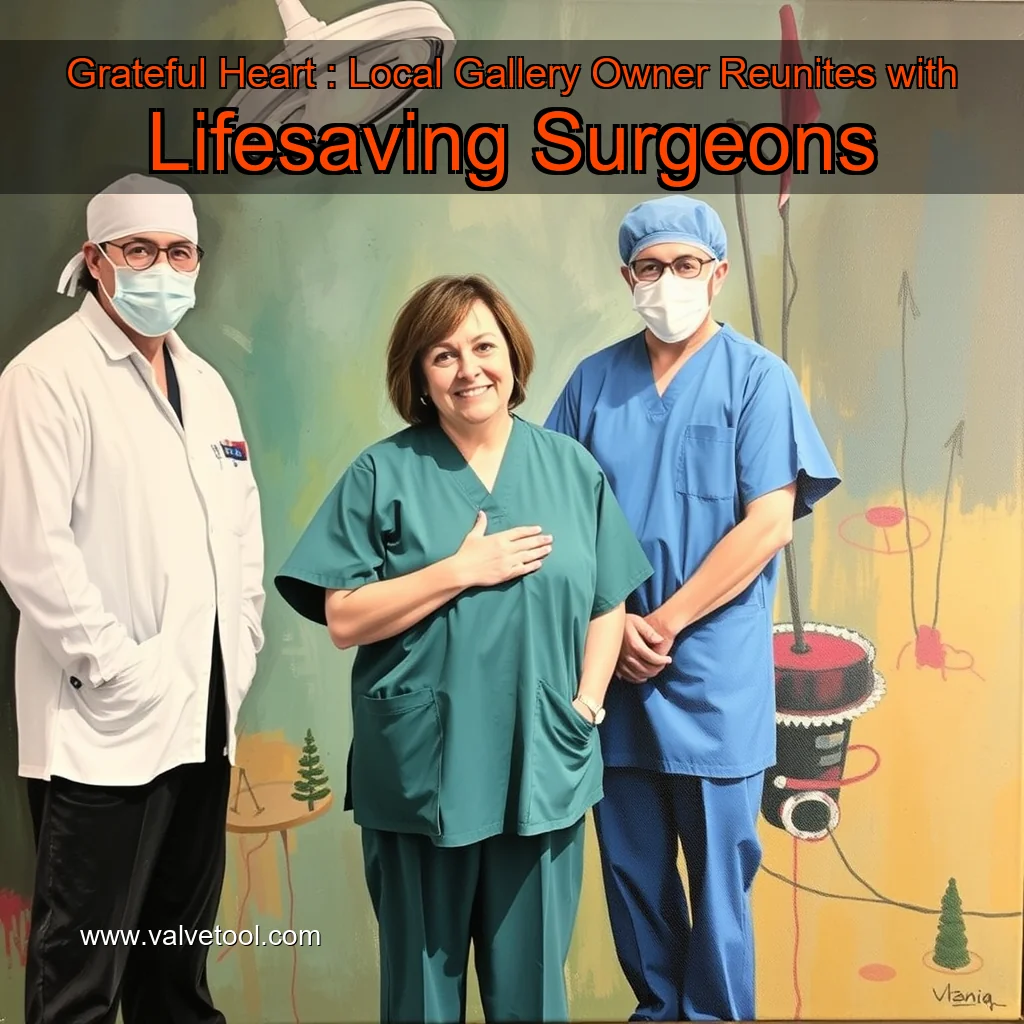
Luke’s, the hospital where he received his life-saving treatment – they offered him a chance to share his story with the entire community.
A Heartfelt Thank You
Scott Wiley, a 68-year-old owner of Apple Creek Gallery in Cedar Rapids, had been living with a heart condition for years. In 2020, he underwent open heart surgery at UnityPoint Health – St. Luke’s, a procedure that saved his life. However, despite the life-changing surgery, Wiley felt a sense of gratitude that he couldn’t quite put into words.
The Power of Community
When Wiley casually mentioned his surgery to UnityPoint Health – St. Luke’s, he was surprised to receive an offer to share his story with the entire community. The hospital saw an opportunity to raise awareness about the importance of organ donation and the impact of their work on patients like Wiley. This gesture not only showed Wiley that his story mattered but also highlighted the power of community in making a difference. The hospital’s willingness to share Wiley’s story was a testament to the strong relationships they have with their patients and the community. By sharing Wiley’s story, UnityPoint Health – St. Luke’s was able to raise awareness about the importance of organ donation and the impact of their work on patients like Wiley. The hospital’s gesture also demonstrated the value of community engagement in promoting health and wellness.
The Story Behind the Surgery
Wiley’s open heart surgery was a life-changing experience that left him with a deep sense of gratitude. Despite the challenges he faced during his recovery, Wiley was determined to make the most of his second chance at life.
This condition, known as mitral regurgitation, can lead to various complications, including heart failure, arrhythmias, and even sudden death.
The Early Years
Wiley was born with a rare congenital heart defect, which would later become a defining characteristic of his life. His parents, who were both athletes, were shocked to discover that their newborn son had a severely regurgitating mitral valve. The condition was diagnosed at birth, and Wiley underwent immediate surgery to repair the valve.
The Road to Recovery
The road to recovery was long and arduous for Wiley.
The Situation
Wiley, a 65-year-old man, was in dire need of a heart surgery. The situation was dire, and the clock was ticking. The medical team had to act fast to save his life. The three leaking sutures in Wiley’s mitral valve were causing irreparable damage to his red blood cells, and the situation was rapidly deteriorating.
The Importance of Prompt Medical Attention
Prompt medical attention was crucial in this situation. Delaying surgery would only exacerbate the damage to Wiley’s heart and increase the risk of complications. The medical team had to work quickly to repair the damaged valve and restore blood flow to Wiley’s heart. The longer the delay, the more severe the damage to Wiley’s heart would become. The risk of complications, such as heart failure or stroke, would increase with each passing minute. The chances of a successful surgery would decrease with each delay.
The Surgical Procedure
The surgical procedure was complex and required great skill and precision. The surgery was a high-risk procedure, and the medical team had to be fully prepared for any complications that may arise. The surgery would involve replacing the damaged valve with a new one.
The History of Heart Valve Replacement
The history of heart valve replacement dates back to the 1950s, when the first mechanical heart valves were developed. These early mechanical valves were made of metal and were prone to wear and tear, leading to the need for frequent replacements. In the 1960s, the development of bioprosthetic valves, made from animal tissue, marked a significant improvement in heart valve replacement.
The Evolution of Heart Valve Replacement
Over the years, the technology and materials used in heart valve replacement have evolved significantly. Today, there are several types of heart valves available, each with its own unique characteristics and benefits. Some of the most common types of heart valves include:
The Role of Dr. Weide in Heart Valve Replacement
Dr. Weide played a significant role in the development of heart valve replacement. In the 1970s, Dr. Weide replaced Wiley’s mitral valve with a tissue valve from a pig. This was a groundbreaking procedure that marked a significant improvement in heart valve replacement.
The Benefits of Heart Valve Replacement
Heart valve replacement is a life-saving procedure that can improve the quality of life for individuals with heart valve disease.
He also enjoys spending time with his family, including his parents and younger brother.
Wiley’s Newfound Appreciation for Life
Wiley’s transformation is nothing short of remarkable. From being a troubled teenager to embracing a positive and optimistic outlook, his journey is a testament to the human capacity for growth and change. His newfound appreciation for life is evident in the way he approaches everyday situations, and it’s clear that he’s learned valuable lessons along the way.
The Turning Point
Wiley’s transformation began when he hit rock bottom. He was struggling in school, had few friends, and was feeling lost and alone. But in that moment of vulnerability, something shifted inside of him. He realized that he had a choice to make: he could continue down the path of negativity and self-destruction, or he could take control of his life and start making positive changes.
Key Factors in Wiley’s Transformation
Several key factors contributed to Wiley’s transformation. These include:
Wiley’s Newfound Appreciation for Life
Wiley’s transformation has had a profound impact on his life. He’s no longer the troubled teenager he once was, and he’s now embracing a positive and optimistic outlook.
The History of UnityPoint Health – St. Luke’s
UnityPoint Health – St. Luke’s has a rich history that dates back to 1885 when the St. Luke’s Hospital was founded in Cedar Rapids, Iowa. The hospital was established by a group of local physicians who recognized the need for quality healthcare services in the community. Over the years, the hospital has undergone several transformations, including a merger with UnityPoint Health in 2018.
Early Years
The Merger with UnityPoint Health
In 2018, UnityPoint Health acquired St. Luke’s Hospital, expanding its presence in the Cedar Rapids market.