This forum brings together early-career engineers and scientists from various NASA centers to discuss topics relevant to their work.
The Importance of the NESC Mechanical Systems TDT
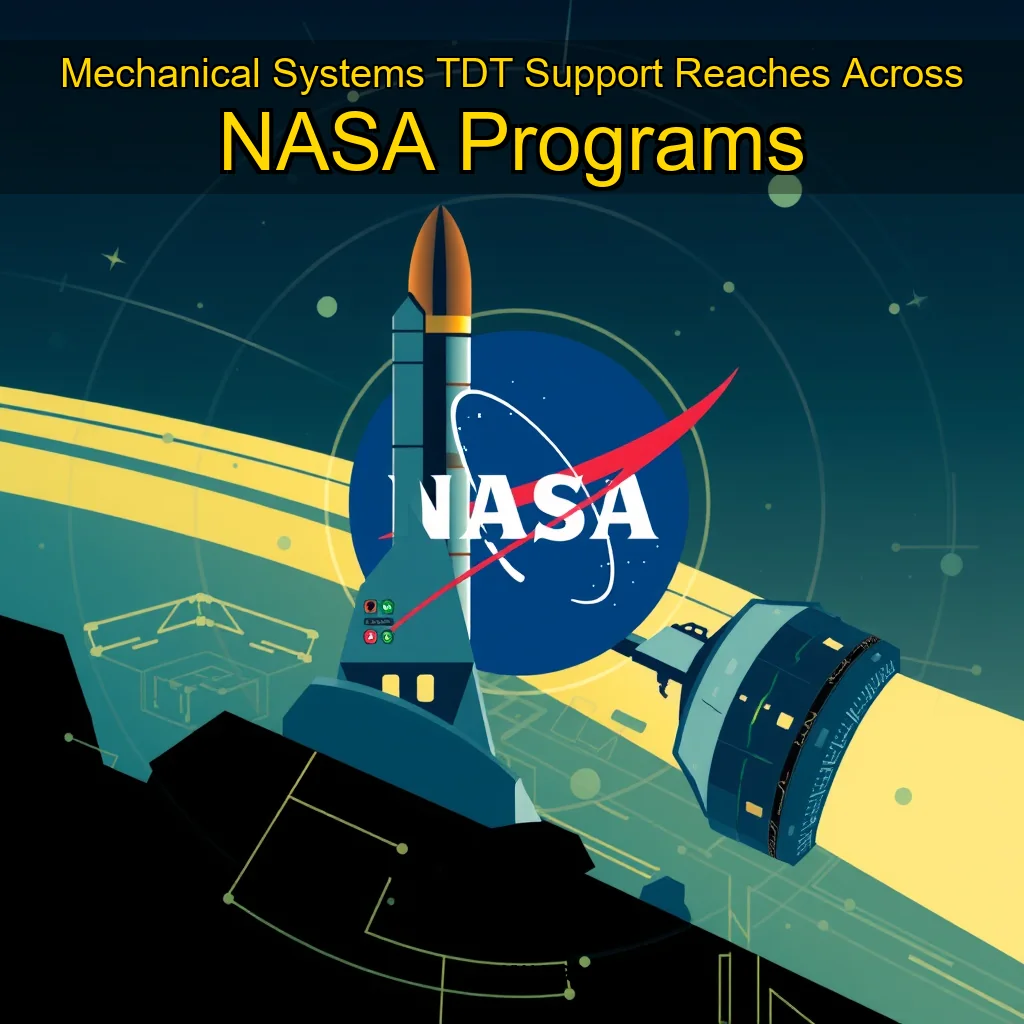
The National Engineering School for Computational Science and Engineering (NESC) Mechanical Systems Technical Development Team (TDT) plays a vital role in supporting NASA’s mission directorates. The TDT’s involvement in various forums and activities underscores its significance in advancing the field of mechanical engineering and its applications in space exploration.
Key Activities and Forums
Benefits of the NESC Mechanical Systems TDT
The NESC Mechanical Systems TDT offers several benefits to NASA’s mission directorates, including:
The Need for a Standardized Valve System
The development of a NASA standard for valves is a response to the growing need for standardized mechanical systems in space exploration. As NASA’s spaceflight programs continue to expand, the complexity of mechanical systems increases, and the need for standardized components becomes more pressing. The lack of standardization in mechanical systems can lead to: + Increased costs due to the need for custom-made components + Reduced efficiency and reliability of systems + Increased risk of component failure and system downtime + Difficulty in maintaining and repairing systems
The TDT’s Approach to Standardization
The TDT assembled a team of subject matter experts from across the Agency to develop a NASA standard for valves.
The results showed that hybrid bearings had a 25% longer lifespan and a 30% lower vibration level compared to steel bearings. These findings have significant implications for the wind turbine industry, where bearings are a critical component of the mechanical system.
Understanding the Significance of Hybrid Bearings
Hybrid bearings, which combine the benefits of ceramic and steel materials, have been gaining attention in recent years due to their potential to improve the performance and lifespan of mechanical systems. In the context of wind turbines, hybrid bearings offer a promising solution to the challenges posed by traditional steel bearings.
Key Benefits of Hybrid Bearings
The Wind Turbine Industry and Bearing Technology
The wind turbine industry is a critical sector that relies heavily on mechanical systems, including bearings. The performance and lifespan of bearings can significantly impact the overall efficiency and reliability of wind turbines.
The team also conducted a thorough review of the design documentation and provided detailed feedback to the project team.
The Challenge
The X-57 Maxwell is an experimental electric aircraft designed to test the feasibility of electric propulsion systems in commercial aviation. The aircraft is equipped with four electric motors, each powered by a high-voltage battery pack.
The Challenges of the Wheel Drive System
The Perseverance Rover’s wheel drive system is a complex and critical component of its mission. While it has proven to be highly reliable in many ways, it is not designed to withstand the harsh conditions of the Martian surface for an extended period. Key challenges: + Limited lifespan: The wheel drive actuators with integral brakes have only been life tested to 40 km.